
ProCell Therapies’ hair regrowth treatment combines microchanneling (a refined form of microneedling) with topically applied lab-cell derived growth factor serums to stimulate dormant hair follicles.
The micro-fine channels increase blood flow and allow growth factors and peptides to deeply penetrate the scalp, encouraging follicles to shift into the active growth phase. This dual action – mechanical stimulation plus bio-active serum – creates an optimal environment for hair regrowth without surgery or significant downtime.
A 2019 clinical pilot study led by hair restoration specialist Dr. Alan Bauman evaluated ProCell’s microchanneling approach. In this 12-patient study (6 men, 6 women with androgenetic alopecia), participants received six in-office microchanneling treatments (every 2 weeks) combined with daily use of a ProCell/AnteAGE MD home hair serum.
The results indicated that: 100% of subjects showed new hair growth by 12 weeks, and 92% saw significant improvements in hair quality and texture. In other words, every treated individual sprouted new “baby hairs” and nearly all noted thicker, healthier-looking hair within about three months. These outcomes align with prior research on microneedling for hair loss – for example, adding weekly microneedling to standard minoxidil therapy quadrupled hair count gains compared to minoxidil alone (an average increase of 91 new hairs per cm² vs. 22 with minoxidil-only in 12 weeks). Such findings underscore that ProCell’s microchanneling can catalyze substantial hair regrowth in a short timeframe.
ProCell’s microchanneling approach is often compared to other popular hair loss treatments in terms of efficacy, invasiveness, and convenience:
ProCell compared with Platelet-Rich Plasma (PRP) Injections: Both PRP and ProCell aim to deliver growth factors to rejuvenate follicles. Studies (number one) and (number two) indicate that microneedling-based treatments (like ProCell) can achieve similar improvements in hair count and thickness as PRP injections - two clinical trials found no significant difference in hair density gains between using microneedling alone versus microneedling + PRP, suggesting that the mechanical stimulation is a key driver of results. PRP requires drawing blood and multiple scalp injections; by contrast, ProCell uses only a stamping device and topical serum, making it far less invasive and more comfortable.
ProCell compared with hair transplant surgery: A hair transplant is a surgical solution that moves follicles from one area to another, suitable for advanced baldness or permanent recession. Compared to transplant surgery, ProCell microchanneling is non-surgical and far less costly, with no grafting or recovery period. It is best suited for those in early-to-mid stages of hair loss (thinning, widening parts, receding hairlines) rather than completely bald areas. Think of ProCell as a “middle lane” – it can significantly thicken existing hair and reawaken follicles that are dormant but not dead. However, ProCell cannot resurrect follicles that have totally ceased to function; in cases of extensive bald scalp with no active follicles, transplantation might be the only option. For the majority of those with gradual thinning hair, microchanneling offers an effective alternative to surgical restoration, and it can also be used after transplant to improve graft growth and scalp health (since it boosts healing and blood supply).
If you would like to know more about Microchanneling treatments email us at [email protected] or call our Care Team on (02) 4002 4150.
Gallery
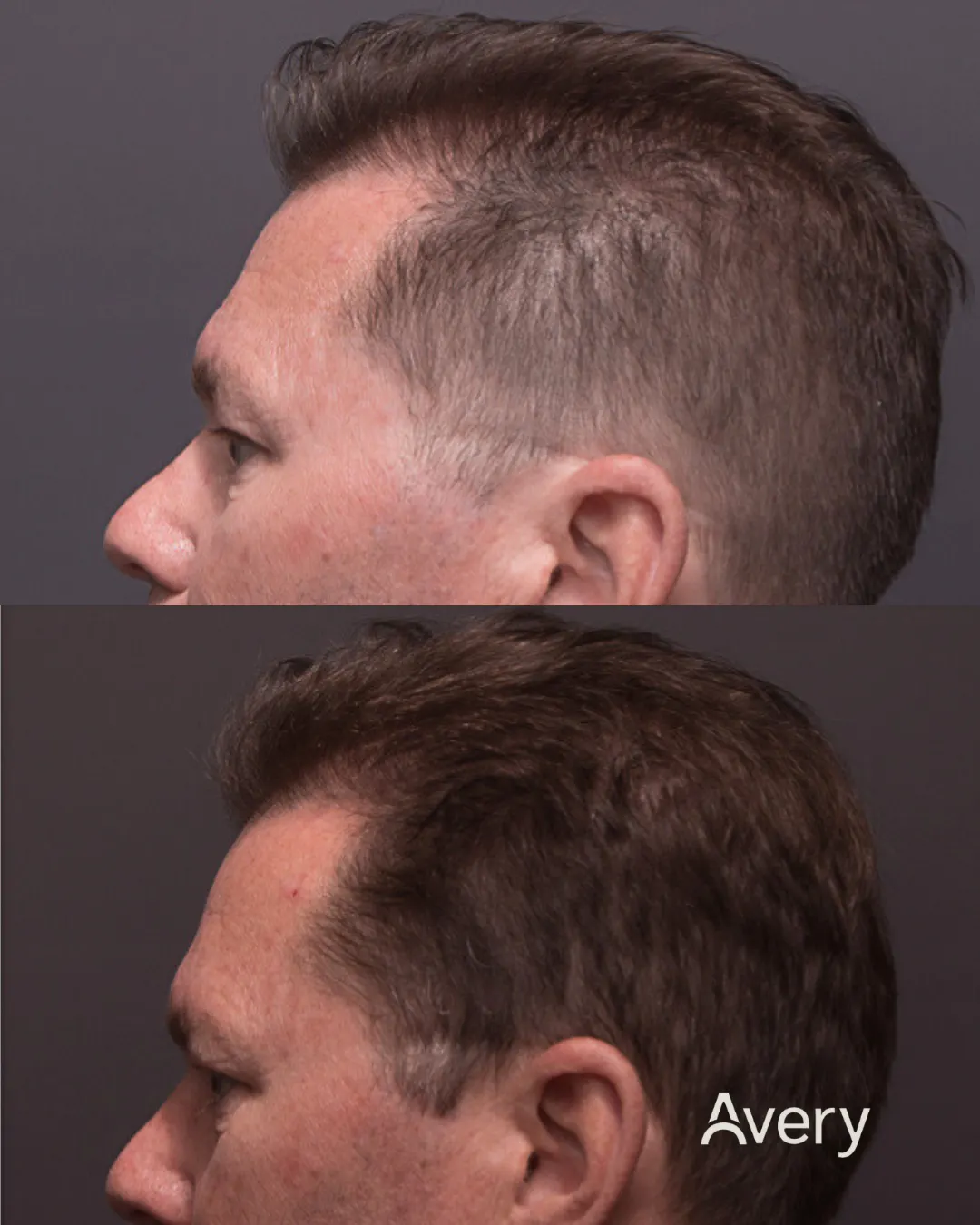
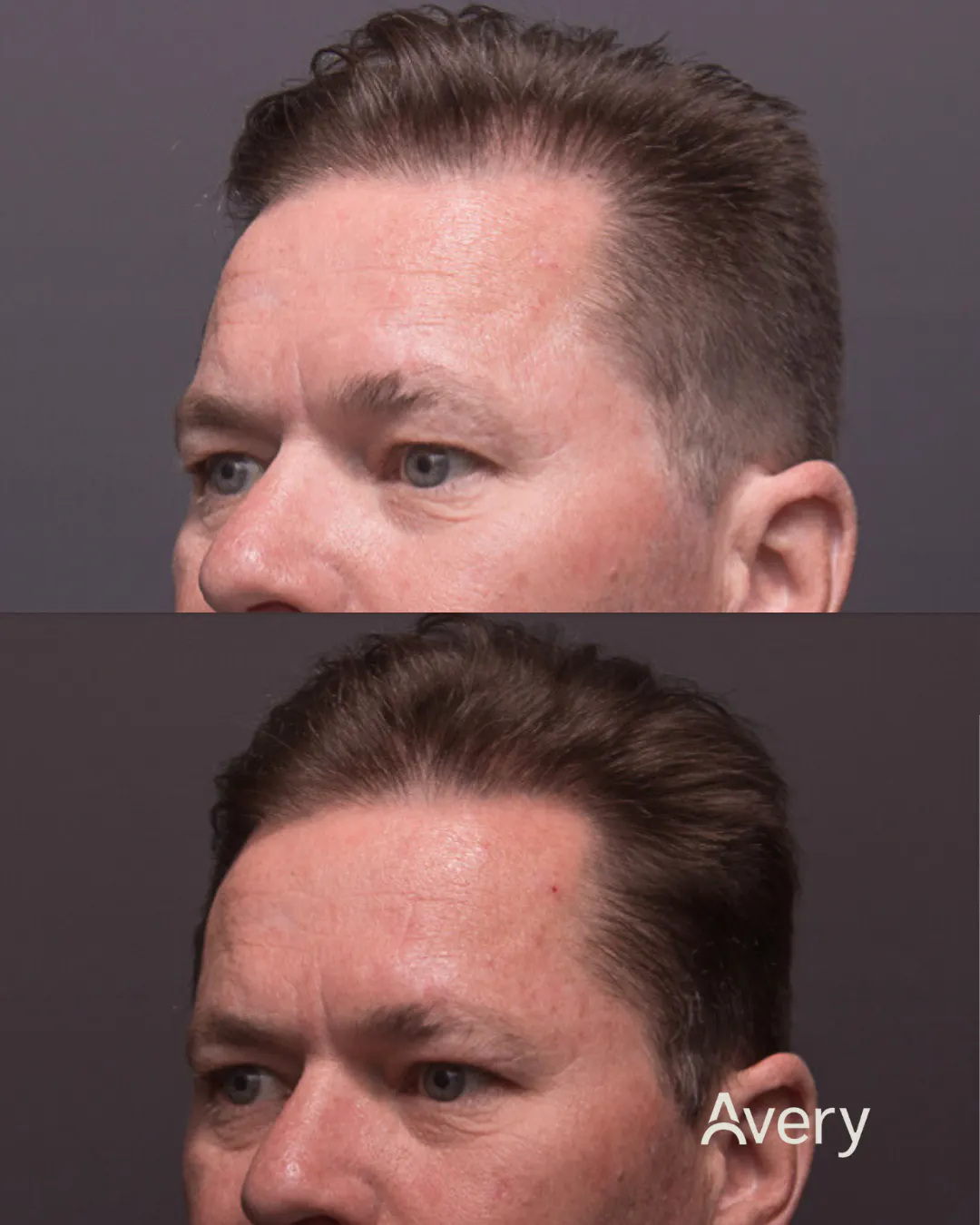
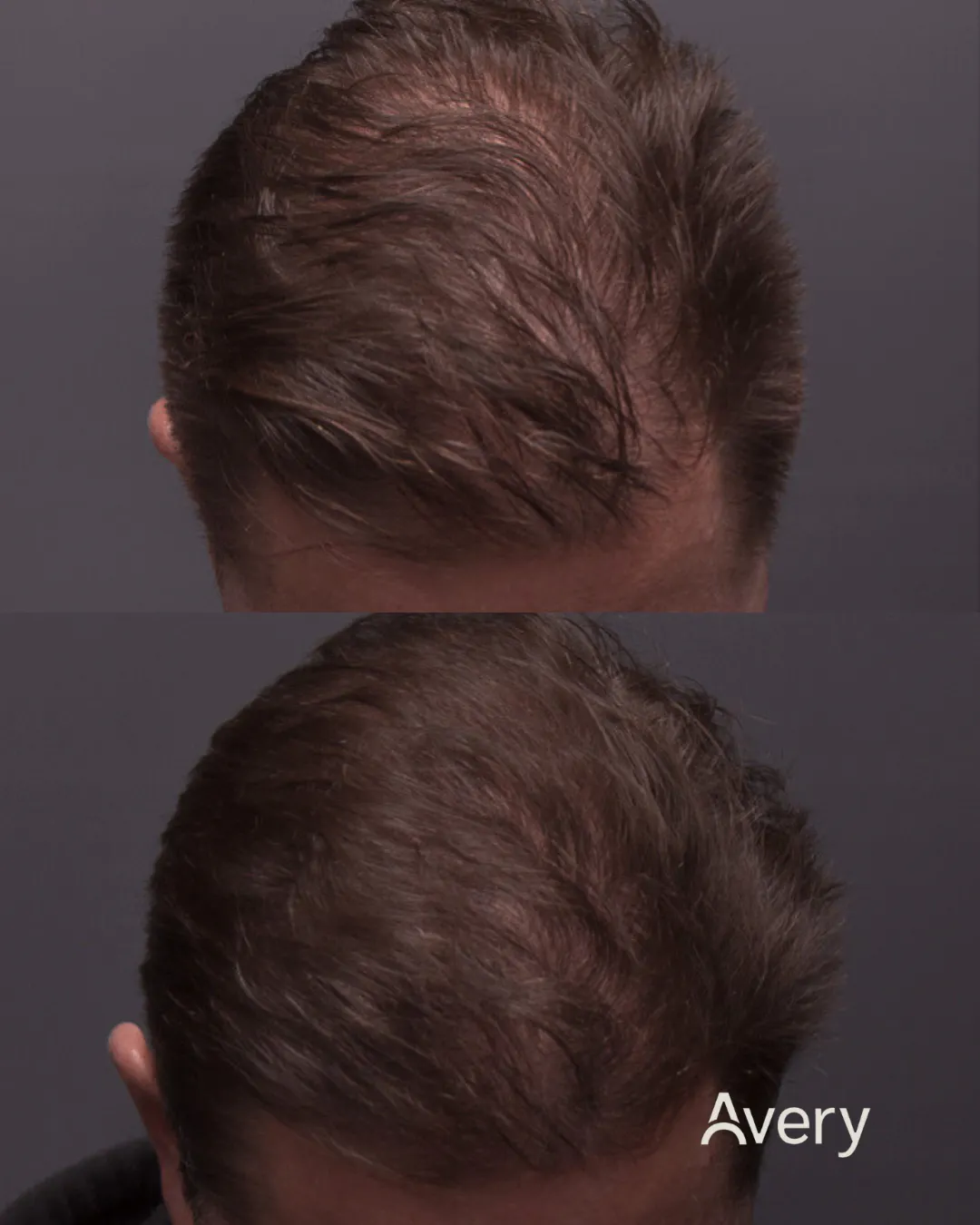
All medical procedures carry risks.
These are known to occur due to micro-injury to the scalp surface and around follicles:
- Scalp erythema and warmth (micro-injury response of scalp skin)
- Oedema / swelling of the scalp
- Tenderness when touching or brushing hair — unique to hair procedures as brushing stresses the treated area
- Mild flaking, dryness or pinpoint scabbing in the hair-bearing scalp
- Temporary increase in shedding (telogen effluvium–like response) — hair-specific
- Temporary change in how hair sits or styles (due to mild inflammation or topical serums)
These relate to the hair cycle, hair follicle integrity, and scalp health:
- Damage to hair shafts or bulbs if needles are too long or too dense
- Folliculitis — infection/inflammation around follicles
- Triggering or worsening of seborrhoeic dermatitis, psoriasis or eczema on the scalp
- Excessive shedding beyond normal TE pattern
- Micro-scarring around follicles (fibrosis) with repeated, aggressive needling
- Worsening hair density if follicular trauma exceeds repair capacity
- Altered hair texture or breakage in some individuals
- Inefficient delivery or irritation from hair-growth serums used concurrently
These relate mostly to infection risk in a hair-bearing area:
- Cellulitis of the scalp
- Abscess formation (rare but documented in hair microneedling when hygiene fails)
- Diffuse inflammatory reaction that temporarily suppresses follicular activity
- Permanent follicular damage from deep or repeated trauma
- Scarring alopecia (rare, theoretical but biologically plausible in over-treatment or poor technique)
Unique to hair-growth attempts:
- No increase in density or calibre of hair despite full protocol
- Uneven response (patchy improvement) because hair follicles respond individually
- No improvement if the cause is scarring alopecia, hormonal alopecia with inadequate control, severe telogen effluvium, autoimmune alopecia, or long-standing follicular miniaturisation
- Plateauing of results after initial mild thickening
Downtime is minimal
- Most people only experience 24–48 hours of visible or noticeable effects.
- Scalp appearance usually returns to baseline within a few days.
Avoid sweating and heat
- Sweating, vigorous exercise, saunas, and steam must be avoided for at least 24–48 hours to prevent irritation.
Do not wash for 24 hours
- To allow the serum to penetrate and the microchannels to seal.
Hair changes
- Hair may feel temporarily dry, textured, or coated from the serum and healing process.
No downtime for most daily activities
- Clients can typically return to normal work immediately, provided they avoid heat and sweating.
Continue using your clinician-recommended hair serum and shampoo if feasible, as this can enhance outcomes. If these products are not financially sustainable, use gentle, sulfate-free shampoos and avoid chemical or heat-based hair treatments.
Protect the scalp from sun exposure with hats or SPF products suitable for the scalp.
Stay well-hydrated to support collagen production and overall scalp health.
Eat a nutrient-rich diet including omega-3 fatty acids, vitamins A, C, D, and E, biotin, and protein. Foods such as fatty fish, leafy greens, nuts, seeds, eggs, and berries can provide essential nutrients for hair growth.
Once hair begins to grow, it enters the Anagen (Growth) phase, which can last approximately 3 years depending on the individual. Results from treatment can last from 6 months up to 3 years; however, we recommend maintenance treatments every 6 months to help prolong and enhance results.
Procell Therapies Hair Microchanneling is suitable for adults experiencing hair thinning or mild hair loss. It may not be suitable for individuals with active scalp infections, certain skin conditions, or those with a history of poor wound healing. ProCell can significantly thicken existing hair and reawaken follicles that are dormant but not dead - ProCell cannot resurrect follicles that have totally ceased to function. A full consultation will assess your suitability.
Before your treatment, a consultation is required to review your medical history, current medications, and hair goals. Your clinician may recommend specific scalp care or hair treatments to optimise results and minimise risks.
During the procedure, your practitioner will create controlled microchannels in the scalp using a precision device. A specially formulated serum is applied to enhance absorption. The treatment is generally well-tolerated, with a mild tingling or prickling sensation during application.
Treatment packages are available and pricing is provided within the context of consultation to determine suitability. To discuss pricing, please email us at [email protected] or call our Care Team on (02) 4002 4150.